Gut Health Beyond Digestion: A Practical Place to Start
Where to begin with gut health—food first, everyday habits, and a clear way to think about supplements, from our counter in Winter Garden.
By Michele Miller · Divine Wellness, Winter Garden
Published September 18, 2026
People ask us about gut health at the shop almost every day, and those conversations can get very honest—yes, we talk about poop. How often someone goes, what has changed, and what feels normal for them can give us helpful clues about their digestion and the discomfort they may be experiencing.
I usually start by asking about their bowel habits, what they have been eating, what symptoms they have noticed, and what they have already tried. That gives us a better picture of the question they are actually trying to answer.
Most of us don’t think much about our gut until it complains. A heavy feeling after lunch. Bloating by late afternoon. Days when everything moves too slowly—or too fast.
Your gastrointestinal tract is working quietly all the time, although sometimes not so quietly. It breaks food into smaller parts, helps your body absorb nutrients, communicates with other systems throughout the body, and turns what remains into stool for elimination.
If you’re curious about supporting your gut health, begin with what you have been eating, what happens after you eat it, and the changes you can realistically make. Then you’ll have a clearer idea of what you might want from a supplement, if you decide to use one.
A simple place to start
You don’t need to completely overhaul your routine. Start with a few basics:
Add fiber gradually instead of making a large change overnight.
Eat a wider variety of vegetables, fruit, beans, whole grains, nuts, and seeds.
Try fermented foods if you enjoy and tolerate them.
Pay attention to whether sleep, stress, movement, or certain foods affect how you feel.
Choose a supplement for a specific reason—not simply because its label says “gut health.”
These steps won’t answer every digestive question, but they can give you useful information about your own patterns.
Why your gut matters beyond digestion
Two things sit under the broad phrase “gut health.”
The first is your digestive system, which breaks food into nutrients your body can absorb. The second is the community of trillions of microorganisms living throughout your digestive tract, with most of them found in the large intestine: your gut microbiome.
These microorganisms help with digestion, make vitamin K, and ferment fibers you can’t digest on your own. The microbiome also interacts with your immune system.
Your gut and brain are constantly talking to each other through nerves, hormones, and chemical signals. That’s why nerves before a big meeting can send you straight to the bathroom, or stress can leave you with butterflies, nausea, or an upset stomach.
And the conversation goes both ways. Your gut sends messages back to your brain about hunger, digestion, and what’s happening in your gut. The bacteria living there also produce substances that can influence this communication.
This ongoing back-and-forth is called the gut–brain axis. It helps explain why digestion, stress, mood, and your overall sense of well-being can feel so closely connected.
Your gut plays roles well beyond digestion. Solid links mark well-established functions; the dashed link marks heart-health research that is still being studied.Read this diagram as text
Your gut, beyond digestion. The digestive tract connects to four areas:
Digestion (well established) — breaking down food and absorbing nutrients.
Gut–brain communication (well established) — signals travel both ways, through nerves and hormones.
Your gut microbiome (well established) — trillions of microbes ferment fiber, make vitamin K, and interact with your immune system.
Heart-health research (still being studied) — scientists are studying connections involving microbial compounds.
Solid connectors mark well-established functions; a dashed connector marks the heart-health research that is still being studied.
Digestion and IBS
Irritable bowel syndrome, or IBS, is a disorder of gut–brain interaction. Stressful life events, past infections, bacterial overgrowth, food sensitivities, and genetics may all play a part.
IBS differs from inflammatory bowel disease, which includes Crohn’s disease and ulcerative colitis. IBS doesn’t cause visible damage to the digestive tract, but the pain and disruption can still be significant.
Stress and digestion
That gut–brain connection is one reason stress reduction, sleep, and physical activity can be part of IBS care, alongside nutrition and medical guidance.
Heart health
Researchers are studying connections between gut microbes and heart health, too.
In one pathway, gut microbes turn nutrients found in foods such as red meat into trimethylamine, or TMA. The liver then converts TMA into TMAO.
In a controlled study of 113 adults, TMAO levels rose during a month of eating red meat and fell after participants changed diets. The pathway is worth studying, while heart health remains much larger than any one gut compound.
Some gut functions are well established. Other connections are still being studied. Keeping that distinction in mind helps when headlines get ahead of the evidence.
What common eating patterns leave out
The common pattern I see isn’t one “bad” food. It’s crowding out. Quick meals and familiar choices can leave less room for foods that provide fiber and plant variety.
Too little plant variety. Vegetables, fruit, beans, whole grains, nuts, and seeds bring different fibers and plant compounds to the table. You don’t need an exact plant count. “Eating the rainbow” is an easy way to remember to bring more variety into your week.
Too many refined, low-fiber foods and sugary drinks. These foods can crowd out more nourishing choices. Adding more whole and minimally processed foods can improve the amount of fiber and variety in your diet.
More alcohol than your gut tolerates. Alcohol can irritate the stomach and intestinal lining and affect the microbiome. Notice how you feel on days you don’t drink. That information may be enough to help you make a different choice in the future.
Convenience itself isn’t the problem. Canned beans, frozen vegetables, oats, and plain yogurt are convenient foods, too. Small upgrades toward more whole and minimally processed foods can make a meaningful difference in the quality and variety of what you eat.
What to add—and what to notice
Small additions are often easier to keep than a complete diet change.
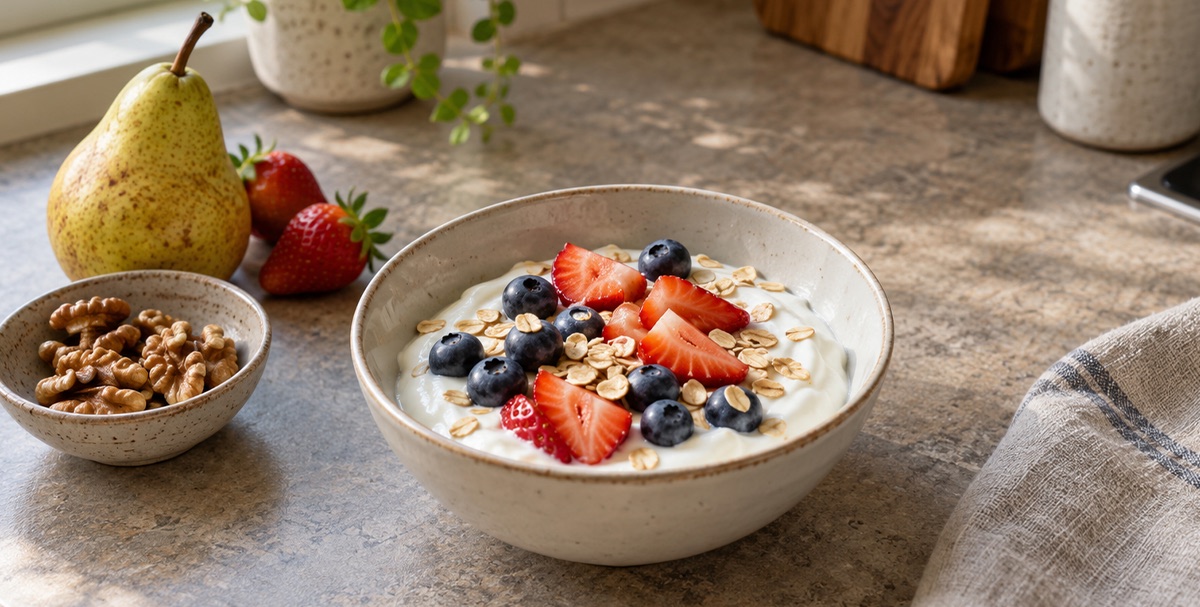
Stir black beans into rice you were already making. Drop frozen spinach into eggs or soup. Add fruit to plain yogurt. When it fits your shopping list, try a vegetable, bean, grain, nut, or seed you don’t usually buy.
Variety gives your gut microbes a wider range of food without turning eating into a plant-count contest.
Add fiber gradually and stay adequately hydrated as you go. A sudden increase—particularly with certain fibers—can mean more gas and bloating.
Plain yogurt with live cultures, kefir, kimchi, or sauerkraut can add variety if you enjoy them. In a small randomized study of healthy adults, participants who ate a diet rich in fermented foods experienced increased gut-microbe diversity and changes in markers of inflammation.
Sleep, movement, and stress matter alongside food, particularly with IBS. If nutritious foods consistently bother you, a clinician or registered dietitian can help you look for patterns without unnecessarily removing foods from your diet.
A low-FODMAP approach may help some people manage symptoms and identify tolerances through planned restriction and reintroduction. It doesn’t diagnose IBS, and it isn’t intended to be a permanent highly restrictive diet.
Persistent symptoms deserve a medical conversation. Seek care for rectal bleeding or unexplained weight loss, severe or worsening pain, or symptoms that wake you at night.
Why homemade L. reuteri yogurt keeps coming up
Homemade probiotic yogurt has gathered a lot of attention online over the past few years. Dr. William Davis helped popularize a long-fermented L. reuteri recipe, along with many personal stories about why people make it.
We experimented with L. reuteri yogurt at home for about three months, and we both noticed physical benefits. That helped me understand why people are so interested in it.
But our experience is still one household’s experience, not a promise of what someone else will notice. Probiotic effects can depend on the specific strain, the amount used, the person taking it, and the reason they’re using it.
If the idea interests you, read a step-by-step guide to Dr. Davis’s method, look into the research on the specific strains, and pay close attention to fermentation and food safety. Then you can decide whether it belongs in your routine.
H — High fiber: Fiber can support regularity, while some prebiotic fibers also feed gut microbes.
O — Omega-3s: These fats have roles throughout the body, including the heart, blood vessels, and immune system. ALA, or alpha-linolenic acid, is the plant-based form found in foods such as flaxseed, chia seeds, and walnuts. EPA and DHA come mainly from fish and seafood, with fish-oil and algal-oil supplements offering other sources. The body converts only a small amount of ALA into EPA and DHA, according to the NIH Office of Dietary Supplements.
P — Probiotics: Their effects depend on the specific microorganism and strain, not simply the number printed on the front of the bottle.
E — Enzymes: Digestion begins in your mouth, where chewing breaks food into smaller pieces and saliva starts breaking down starches. Enzymes in the stomach and small intestine continue the process. Most healthy people make the enzymes they need, although specific conditions may require specific care.
HOPE is Brenda’s framework, not a checklist everyone needs to follow. Omega-3s can be part of a whole-health routine, but they don’t feed gut microbes in the same way prebiotic fiber does. Someone struggling to eat enough fiber has a different question from someone managing persistent IBS symptoms. Those situations deserve different conversations.
One distinction also helps when you’re comparing probiotic labels: diversity in your gut is different from the number of strains in a capsule. A large strain count or CFU number doesn’t tell you by itself whether a product fits your needs.
The NIH Office of Dietary Supplements recommends looking at the named genus, species, and strain; the expiration or use-by date; storage directions; and whether the CFU count applies through expiration rather than only at manufacture.
Different products have different jobs
There isn’t one supplement that does everything implied by the phrase “gut health.” The products we carry address different needs, which is why it helps to begin with the job you want a product to do.
Daily and targeted probiotics
We carry both refrigerated and shelf-stable probiotic options.
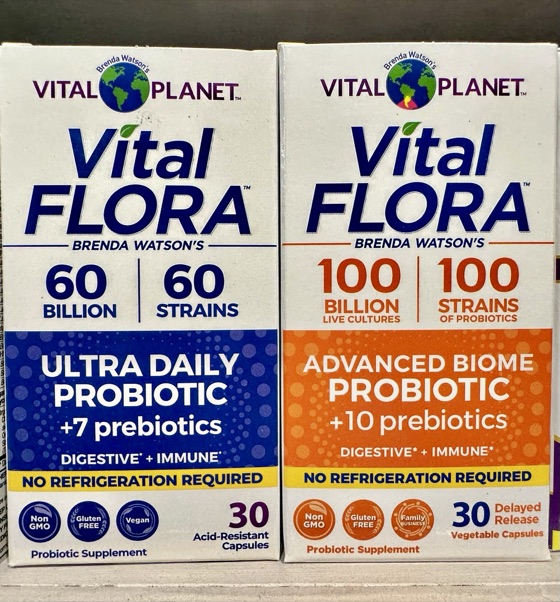
Vital Flora Ultra Daily provides 60 billion live cultures from 60 strains, along with seven organic prebiotic sources. It is formulated for everyday digestive and immune support.
Vital Flora Advanced Biome provides 100 billion live cultures from 100 strains, along with ten organic prebiotic sources. It is the more diverse, higher-potency daily option.
Vital Flora Ultra Daily and Advanced Biome, on our shelf.
Vital Planet describes its Intense Care line as “condition-specific,” with formulas focused on particular concerns such as occasional gas and bloating.
More strains or a higher CFU count doesn’t automatically make one probiotic better for every person. The right fit depends on the strains, why you’re considering it, what you tolerate, and any medical guidance involved.
Probiotics are generally well tolerated by healthy adults. If you are seriously ill or have a weakened immune system, check with your healthcare professional before starting a probiotic supplement or a homemade live-culture preparation.
Intestinal-lining support
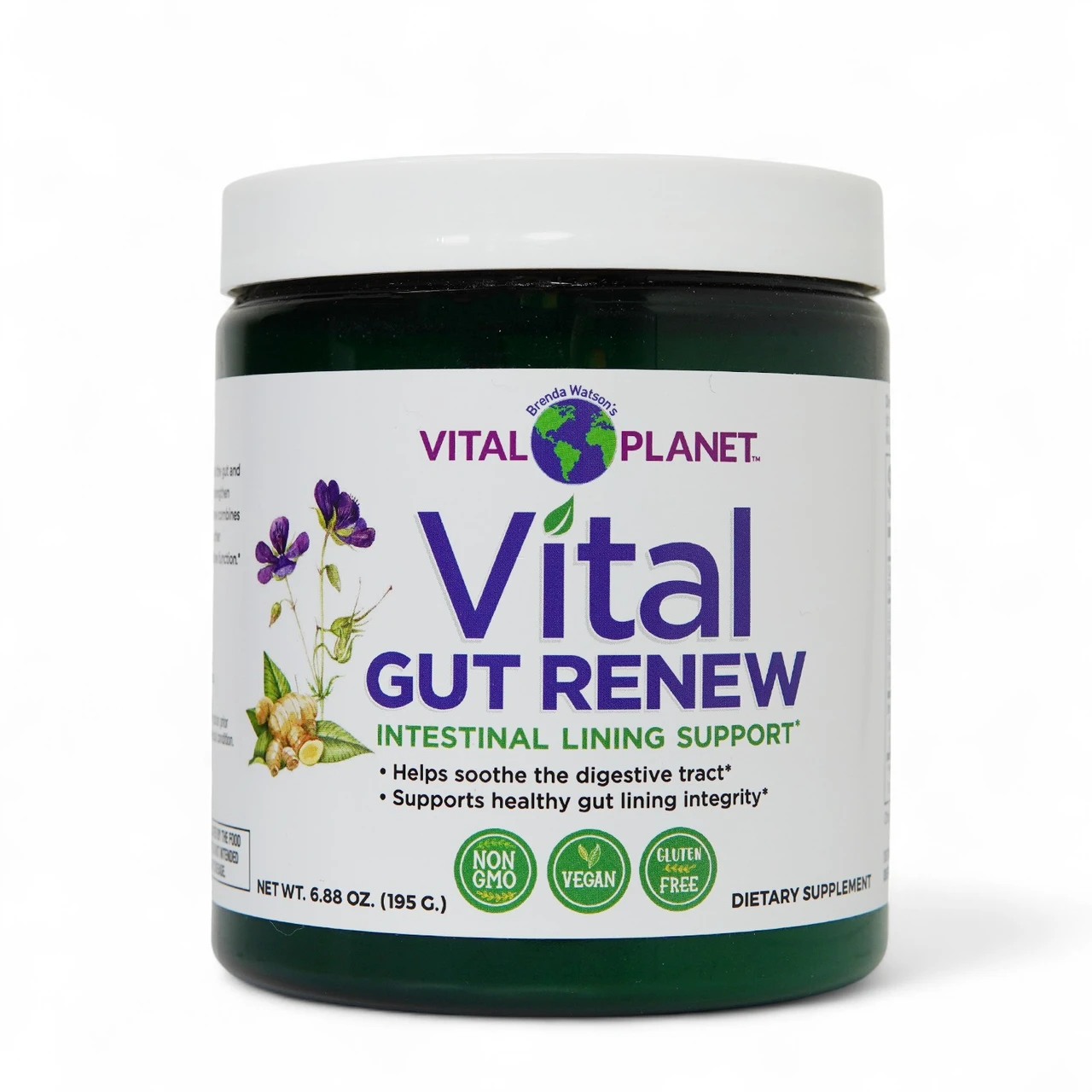
Vital Gut Renew is an unflavored powder centered on L-glutamine, with N-acetyl D-glucosamine, DGL licorice, aloe, ginger, and marshmallow root. It is formulated to support healthy intestinal-lining integrity and digestive comfort.
We also carry several digestive-enzyme formulas. Some are intended for everyday meal support, while others are designed to help break down particular components of food, including lactose or components of gluten-containing meals.
The distinction matters. Lactase can help some people digest lactose, but it doesn’t make dairy safe for someone with a milk allergy. Products marketed for gluten digestion aren’t substitutes for avoiding wheat allergens or following a medically required gluten-free diet, including for celiac disease.
Vital Lax is formulated for occasional constipation and should be used according to its label directions. A laxative isn’t a replacement for gradually increasing dietary fiber, staying adequately hydrated, or seeking medical guidance for persistent constipation.
These products aren’t interchangeable, and none is automatically the right starting place for everyone. What makes sense depends on what you’re looking for, what the rest of your routine already provides, and any health conditions, medications, or medical guidance involved.
Bring your questions—or a label you’re trying to understand—to our counter at 95 E Palmetto St in Winter Garden. We’re here Monday through Saturday, 10:30 a.m. to 7 p.m. I’d be happy to look it over with you.
— Michele
These statements have not been evaluated by the Food and Drug Administration. Dietary supplements are not intended to diagnose, treat, cure, or prevent any disease. This article is for general education and is not medical advice. Talk with your healthcare provider about persistent symptoms or before starting a supplement, especially if you are pregnant, immunocompromised, or managing a medical condition.
STAY CONNECTED
Wellness Notes from the Shop.
Get new articles, seasonal wellness tips, and shop updates from Divine Wellness—useful notes only, sent now and then.